
Two Years and Counting
Georgia's Deadlines and the Ante Litem Trap
Deadlines are the one part of a car accident claim with no gray area. Everything else in this book involves judgment, negotiation, or a fight over percentages. A deadline either got met or it did not.
Most people know there is a two year window in Georgia. Far fewer know that in certain cases there is an earlier deadline that sits in front of it, and that missing that one shuts the door before you ever get to the two years. Those are usually the cases where somebody handled it themselves, looked it up online, and felt fine right up until they were not.
I also want to cover the situations where the clock starts later than you would expect, because they come up more than people think, especially with kids.
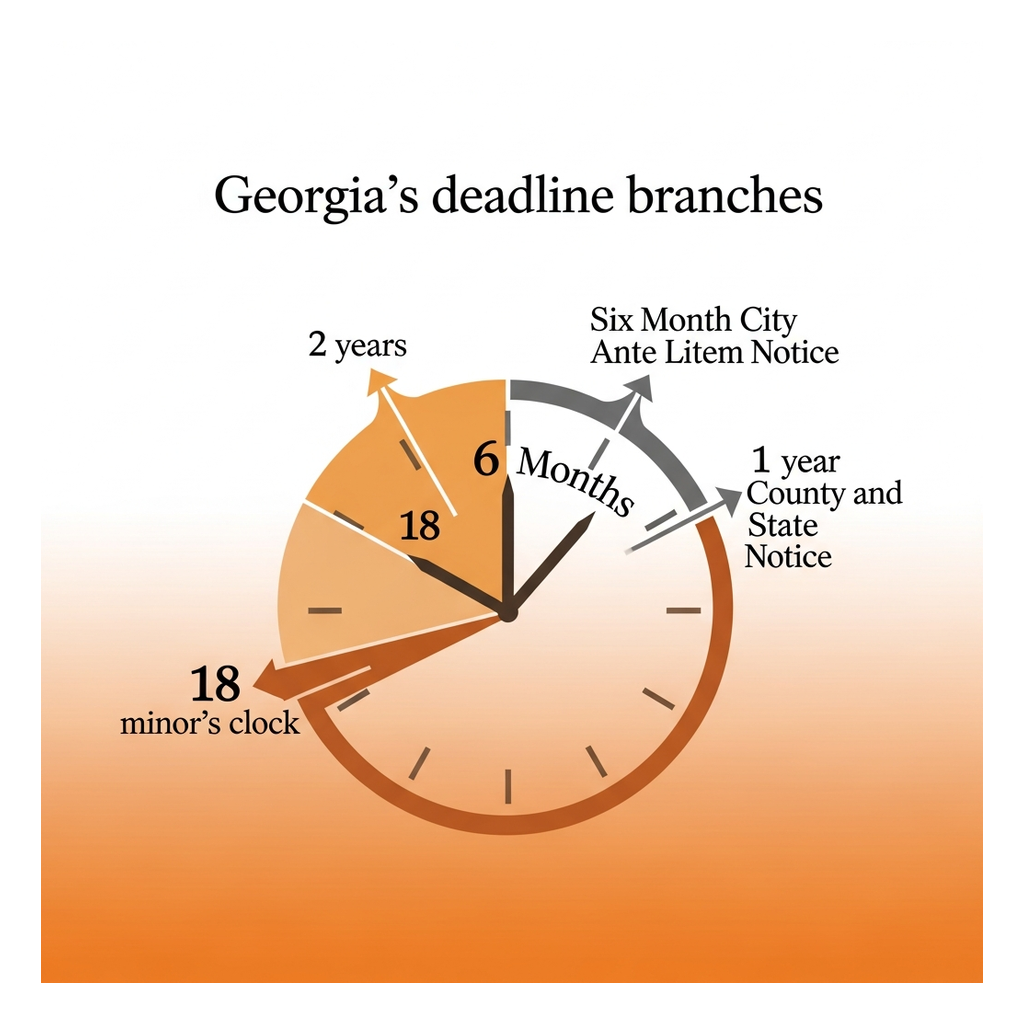
If you're dealing with a victim who's a minor, technically the 2-year statute doesn't begin to run, doesn't start on the anniversary of the wreck. It starts on the anniversary of the minor becoming 18. So 7-year-old literally has 11 years where the statute's not running. They then turn 18, then the 2 years runs.
The Base Rule Is Two Years From the Accident
For personal injury in Georgia, the deadline is typically two years. That is your standard. It runs from the date the wreck occurred, so your marker is the two year anniversary.
By that anniversary, your lawsuit is filed or you forever lose your rights. Not reduced, not weakened. Gone. There is no version of this where you get it back because you did not know, because you were still treating, or because you were still talking to an adjuster who kept saying they were reviewing it.
There are exceptions that can push it out past two years, and I will get to those. They are not typical, and this is one of the main reasons to have a lawyer looking at your case even if the rest of it seems simple. Somebody should be able to tell you with certainty whether two years is your number.
What I tell people is to just assume it is two years. Do not miss the two year deadline, and do not go anywhere near it.
The Deadline That Comes Before the Deadline
Now, there is a category where the timeline gets shorter, and it is the one that ends the most claims. That is when a government entity is involved.
Think about how often that happens on Georgia roads. School buses. Police vehicles. We handle a lot of those. Any city, county, or state vehicle puts you here.
It is still a two year statute of limitation. But there is an extra limitation that comes in earlier, and if you miss it, it automatically cuts off your ability to file at all within those two years. What is driving that is sovereign immunity. The government gets notice before it gets sued.
The mechanism is called an ante litem notice, and it is your first step, not your second. Which deadline applies depends on which entity you are going after. It is six months if it is a city or municipality. It is one year if it is a county or the State of Georgia. You also have to follow the specifics on how that notice gets filed, because doing it late and doing it wrong land in the same place.
Look, this is where people get hurt. A lot of people who try to handle claims on their own do not realize any of this exists. They look it up on the internet, they see two years, and they think they are good. So if you are technically going after the city because it was a city vehicle or a police officer, and you did not get that ante litem notice in within six months, the two year statute does not matter anymore. You miss it, case over. You cannot even start.
When the Clock Starts Later
There are two more typical extensions in car wreck cases, plus one that comes from the criminal side.
The first is minors. If the victim is a child, the two year clock does not begin on the anniversary of the accident. It begins when that minor turns 18. So a seven year old has eleven years where the statute is not running at all. Then they turn 18, and then the two years starts. They can still pursue the claim at any point during that whole stretch, which is worth knowing if you are a parent trying to figure out whether you have already lost something.
The second is legal incapacity. If someone has a legitimate legal incapacity, it works similarly to the minor situation. The clock starts when their capacity comes back.
The third is the criminal case. In a wreck, that usually means the ticket issued to the at fault driver. Until that ticket is disposed of, either by the driver paying it or fighting it in court and being found guilty, the two years does not start to run. From a technical standpoint that can buy you anywhere from a couple of additional months to as much as a year.
Shorter Deadlines in Other Kinds of Cases
There are personal injury categories with shorter deadlines than two years. Medical malpractice is the one people ask about most.
That is not really a car accident issue, so I am not going to spend time on it here. For car wrecks in Georgia, the shortened deadline that should be on your radar is the government entity situation and the ante litem notice that comes with it.
Common Questions
- How long do I have to file a car accident lawsuit in Georgia?
- Typically two years, running from the date of the accident. By that two year anniversary your lawsuit is filed or you forever lose your rights. A few situations extend it and one common situation shortens the practical deadline, so the safe approach is to treat two years as firm and get a lawyer to confirm your specific date well before you are close to it.
- What is an ante litem notice and when is it due?
- It is the notice you have to give a government entity before you can sue it, and sovereign immunity is what drives it. The deadline is six months if it is a city or municipality, and one year if it is a county or the State of Georgia. There are specifics you have to follow on how it gets filed. Miss it and the two year statute becomes irrelevant.
- Does the two year deadline apply to a child who was injured?
- No, the clock works differently for minors. It does not start on the accident anniversary. It starts when the child turns 18, and the two years runs from there. A seven year old has eleven years where the statute is not running at all. The claim can still be pursued during that entire time, so nothing is lost by waiting, though the evidence gets harder to hold onto.
- Does a traffic ticket against the other driver affect my deadline?
- It can. Until the ticket is disposed of, either by the at fault driver paying it or fighting it and being found guilty, the two years does not start to run. That can add a couple of months to as much as a year. It is real, but I would not build a plan around it.
Chapter Reflection
I will tell you my own posture on all of this, because it is more conservative than the rules require. I am kind of a worrywart. I would rather not have to argue with anybody over whether an extension applies, because arguing about it means the deadline is already close enough to be a problem. So I tell people to just go by the two years. By two years you should be ready anyway. Your treatment has run its course, the records are in, and you know what the case is. If it is not resolving by then, let us get it filed and pursue it rather than playing around with extensions. Deadlines are the one place in this process where being early costs you nothing at all. Anyone unsure which deadline applies can raise it with Ted Spaulding directly.